- Your cart is empty
- Continue Shopping


What’s the Difference Between Anxiety and Panic Attacks?
- Anxiety & Mental Health
- Posted on
-
by pharm_product
- 0 comments
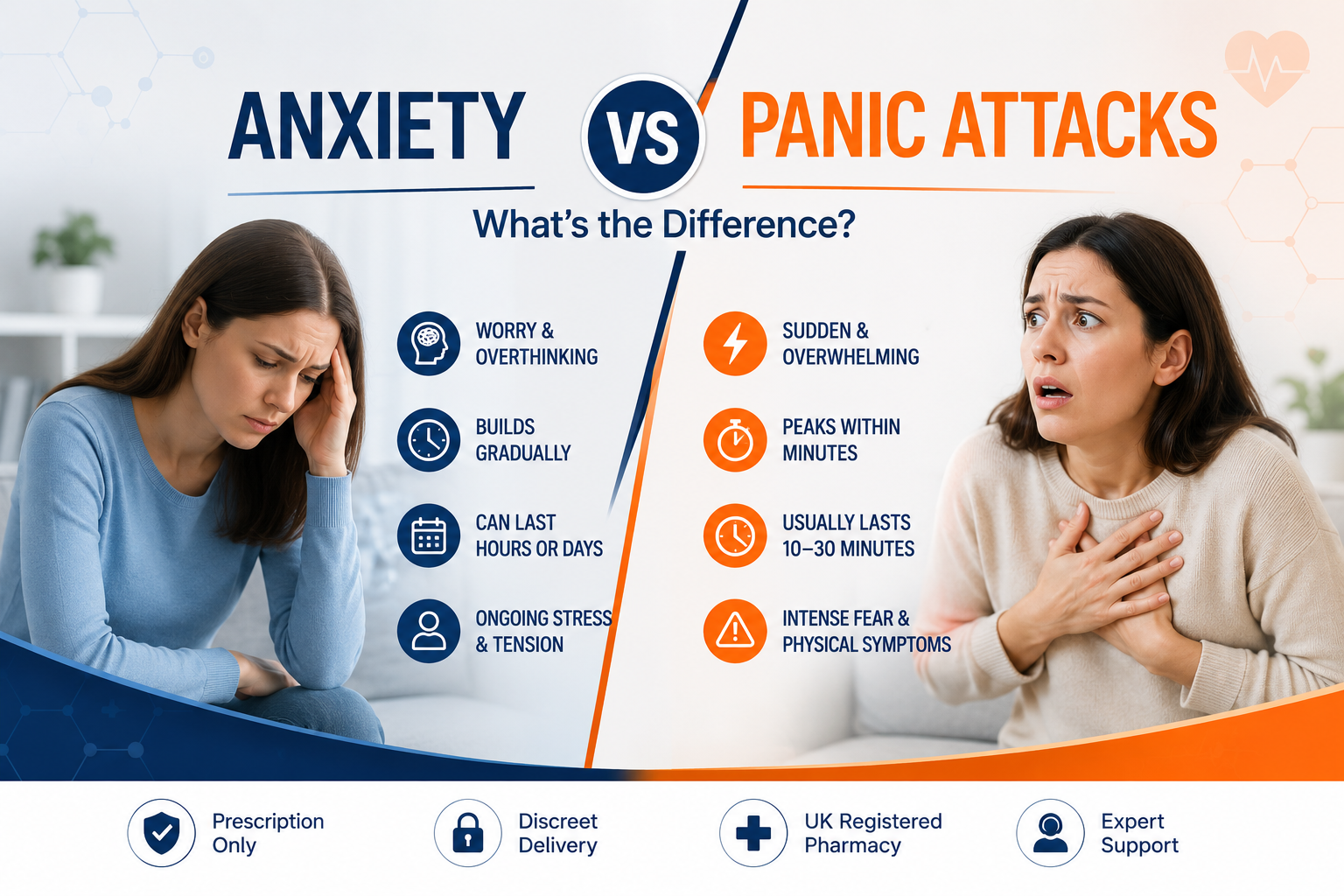
Many people use the terms anxiety and panic attacks interchangeably, but they are not the same thing. While both can cause intense emotional and physical symptoms, they differ in how they develop, how long they last, and how they affect daily life.
Understanding the difference is important because the right treatment often depends on whether you’re experiencing ongoing anxiety, occasional panic attacks, or a combination of both.
In this guide, we’ll explain the key differences between anxiety and panic attacks, discuss their symptoms and causes, and explore the treatment options that may be recommended by healthcare professionals.
What Is Anxiety?
Anxiety is your body’s natural response to stress or perceived danger. Everyone experiences anxiety occasionally, such as before an exam, job interview, or important life event.
However, when anxiety becomes excessive, persistent, or begins interfering with everyday life, it may be diagnosed as an anxiety disorder.
People living with anxiety often experience a constant feeling of worry that doesn’t easily go away, even when there is no immediate threat.
What Is a Panic Attack?
A panic attack is a sudden episode of intense fear or overwhelming discomfort that reaches its peak within minutes.
Unlike general anxiety, panic attacks often appear unexpectedly and can feel frightening enough to make someone believe they are having a heart attack or another medical emergency.
Although panic attacks are not usually life-threatening, they can be extremely distressing and should always be assessed by a healthcare professional, particularly if they occur repeatedly.
Anxiety vs Panic Attacks: Key Differences
| Anxiety | Panic Attack |
|---|---|
| Develops gradually | Begins suddenly |
| Usually linked to ongoing stress or worry | May occur without warning |
| Symptoms build over time | Symptoms peak within minutes |
| Can last hours, days, or longer | Usually lasts 10 to 30 minutes |
| Persistent worrying | Intense fear and physical symptoms |
| Often manageable but distressing | Frequently feels overwhelming |
Symptoms of Anxiety
Anxiety symptoms vary from person to person but commonly include:
- Constant worrying
- Feeling nervous or restless
- Difficulty concentrating
- Irritability
- Trouble sleeping
- Muscle tension
- Feeling on edge
- Fatigue
- Digestive discomfort
- Increased heart rate
Many people experience these symptoms daily when living with an anxiety disorder.
Symptoms of a Panic Attack
Panic attacks are generally more intense.
Symptoms may include:
- Sudden racing heartbeat
- Chest pain
- Shortness of breath
- Sweating
- Shaking or trembling
- Feeling dizzy
- Nausea
- Tingling sensations
- Feeling detached from reality
- Fear of losing control
- Fear of dying
Because these symptoms can closely resemble those of serious medical conditions, anyone experiencing them for the first time should seek prompt medical assessment.
What Causes Anxiety?
Anxiety usually develops gradually and can be influenced by several factors, including:
- Long-term stress
- Work pressure
- Financial concerns
- Family responsibilities
- Relationship problems
- Previous traumatic experiences
- Genetics
- Certain medical conditions
Often, several factors contribute at the same time.
What Triggers Panic Attacks?
Panic attacks can occur for many different reasons.
Common triggers include:
- High stress
- Panic disorder
- Certain phobias
- Traumatic experiences
- Caffeine
- Alcohol withdrawal
- Some medications
- Significant life changes
Interestingly, panic attacks can also occur without any obvious trigger, even when someone feels calm beforehand.
Can Anxiety Cause Panic Attacks?
Yes.
People with ongoing anxiety may experience panic attacks if anxiety becomes particularly severe.
However, not everyone with anxiety develops panic attacks, and not everyone who experiences panic attacks has an anxiety disorder.
Your healthcare provider can help determine the underlying cause of your symptoms.
Which Condition Is More Serious?
Neither condition should be ignored.
Persistent anxiety can significantly affect:
- Sleep
- Relationships
- Work performance
- Physical health
- Overall quality of life
Repeated panic attacks may lead people to avoid certain places or situations due to fear of another episode, which can eventually interfere with normal daily activities.
Both conditions deserve proper assessment and treatment.
How Are Anxiety and Panic Attacks Diagnosed?
There is no single blood test or scan that diagnoses anxiety disorders or panic disorder.
Instead, your GP or mental health professional will:
- Discuss your symptoms
- Review your medical history
- Rule out physical causes
- Assess how symptoms affect daily life
- Determine whether another condition could be contributing
An accurate diagnosis is the first step towards appropriate treatment.
Treatment Options
Treatment depends on your symptoms, medical history, and how severely your condition affects everyday life.
Your healthcare provider may recommend:
- Cognitive Behavioural Therapy (CBT)
- Counselling
- Lifestyle changes
- Stress management techniques
- Relaxation exercises
- Regular physical activity
- Prescription medication where appropriate
Many people benefit from a combination of psychological therapies and medication.
When Is Medication Considered?
Medication is not appropriate for everyone, but it may be recommended when symptoms are severe, persistent, or significantly affect daily functioning.
Depending on your diagnosis, a healthcare professional may prescribe medications such as:
- Lorazepam for short-term management of severe anxiety.
- Diazepam for anxiety, muscle tension, or certain acute situations.
- Alprazolam for panic disorder or severe anxiety where clinically appropriate.
If you have been prescribed these medicines by your healthcare provider, you can Buy Lorazepam, Buy Diazepam, or Buy Alprazolam through our secure online pharmacy using a valid UK prescription.
These medicines are generally intended for short-term use because they can lead to tolerance and dependence if taken regularly over extended periods.
Can Lifestyle Changes Help?
For many people, healthy habits can make a meaningful difference.
Helpful strategies include:
- Getting regular exercise
- Maintaining a consistent sleep schedule
- Reducing caffeine intake
- Limiting alcohol
- Eating a balanced diet
- Practising mindfulness or meditation
- Learning breathing exercises
- Talking to trusted friends or family
Lifestyle changes may not completely eliminate anxiety, but they often work well alongside professional treatment.
When Should You Seek Medical Advice?
You should speak to your GP if:
- Anxiety is affecting your daily life.
- You experience repeated panic attacks.
- Your symptoms continue to worsen.
- You avoid activities because of fear.
- You’re struggling to cope emotionally.
- You have thoughts of harming yourself.
Early treatment often leads to better long-term outcomes.
Frequently Asked Questions
Can anxiety last all day?
Yes. Anxiety can persist for hours, days, or even longer depending on the underlying cause.
How long does a panic attack last?
Most panic attacks reach their peak within 10 minutes and usually resolve within 20 to 30 minutes, although some symptoms may linger afterwards.
Can panic attacks happen while sleeping?
Yes. Some people experience nocturnal panic attacks, which wake them suddenly from sleep with intense physical symptoms.
Is anxiety the same as panic disorder?
No. Anxiety is a symptom or group of disorders, whereas panic disorder is a specific mental health condition characterised by repeated panic attacks.
Will medication cure anxiety?
Medication helps manage symptoms but does not cure anxiety disorders. Many people achieve the best results by combining medication with therapy and lifestyle changes.
Final Thoughts
Although anxiety and panic attacks share many symptoms, they are distinct conditions that require different approaches to diagnosis and treatment. Anxiety typically develops gradually and involves persistent worry, while panic attacks are sudden episodes of intense fear that often peak within minutes.
If you’re experiencing either condition, don’t ignore your symptoms. Speaking with a healthcare professional can help you receive the right diagnosis and a personalised treatment plan.
If you’ve been prescribed medication as part of your treatment, you can Buy Lorazepam, Buy Diazepam, or Buy Alprazolam through our UK online pharmacy, alongside expert support and discreet delivery.
